

As a key indicator of a company’s financial performance over time, retained earnings are important to investors in gauging a company’s financial health. This post will walk step by step through what retained earnings are, their importance, and provide an example. The statement of retained earnings is most commonly presented as a separate statement, but can also be appended to the bottom of another financial statement. Yes, having high retained earnings is considered a positive sign for a company’s financial performance.
How Does a Balance Sheet Show Retained Earnings?
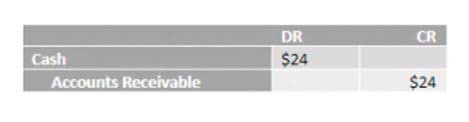
One way to determine retained earnings is to add net income to the retained earnings from the prior term, or to deduct net losses from the retained earnings from the previous term. Financial records reflect dividend payments as net decreases because they cause a cash outflow. When a business pays out dividends in the form of cash, it effectively gives up control of its liquid assets, which lowers their worth on the balance sheet and has an effect on retained earnings.
Retention vs. Distribution

Therefore, the retention ratio is an essential tool for institutional investors to assess Online Accounting a company’s financial health and management efficiency in deploying profits for future growth. By analyzing a firm’s historical retention ratios and comparing them with industry benchmarks and competitors, investors can make more informed decisions regarding their investments in specific equities. For instance, suppose a corporation earns $2 million in net profit during a financial year, but pays out $1 million in dividends. The remaining $1 million will be reflected in the statement of retained earnings as an increase in the company’s retained earnings balance. This statement provides valuable insights into a company’s profit reinvestment strategies, enabling investors to assess its growth potential. Institutional investors can assess a company’s financial performance, profit distribution strategy, and management approach towards capital allocation by examining the statement of retained earnings.

Evaluating Company Performance
In contrast, a low retention ratio could signify underinvestment in the business compared to peers, leading to missed opportunities for expansion and potential stock underperformance. Stay tuned as we dive deeper into the importance of analyzing a company’s statement of retained earnings and the insights it provides the statement of retained earnings reports the amount: institutional investors. In the following sections, we will explore Apple’s approach towards reinvesting profits, its impact on shareholder equity, and its long-term growth prospects. A statement of retained earnings is a financial statement that lists a business’s retained earnings at the end of a reporting period.
On the other hand, when a company experiences growth in its retained earnings, it often indicates a reinvestment of profits into the business or potential for future dividend payments. As retained earnings increase, so does shareholders’ equity, resulting in a greater net book value of the company’s equity. Retained earnings refer to the accumulated portion of a company’s profits that are not distributed as dividends to shareholders, and are instead reserved for reinvestment back into the business. These funds are typically used for working capital, fixed asset purchases (capital expenditures) or allotted for paying off debt obligations. Retained earnings are profits held by a corporation in reserve for future investments rather than being paid out as dividends to shareholders.
- This information is essential for investors and stakeholders who are keen on understanding the company’s financial health and growth prospects.
- Along with the income statement and balance sheet, the statement of retained earnings is a vital tool for assessing the financial health and future potential of a business.
- Finally, you can calculate the amount of retained earnings for the current period.
- It has paid out more in distributions to exactly the same amount as the Owners’ Equity.
- Made for businesses at every stage of growth, Shopify Finance provides innovative tools to helpmanage cash flow, access funds faster, and simplify financial tasks.
Global Impact
The key to a successful internal reinvestment strategy is to identify sectors within the business with the highest potential for growth and allocate resources accordingly. Most software offers ready-made report templates, including a statement of retained earnings, which you can customize to fit your company’s needs. Retained earnings, on the other hand, refer to the portion of a company’s net profit that hasn’t been paid out to its shareholders as dividends. Shareholders, analysts and potential investors use the statement to assess a company’s profitability and dividend payout potential. The statement of retained earnings is generally more condensed than other financial statements.
Capital Allocation Strategy
The statement is most commonly used when issuing financial statements to entities outside of a business, Bookkeeping vs. Accounting such as investors and lenders. When financial statements are developed strictly for internal use, this statement is usually not included, on the grounds that it is not needed from an operational perspective. Small businesses don’t always prepare standalone statements of retained earnings.
- By analyzing changes in retained earnings over time, investors can make well-informed decisions.
- When a company consistently experiences net losses, those losses deplete its retained earnings.
- Low or negative retained earnings indicate that the company may have problems repaying its debt.
- A statement of retained earnings is a financial statement that lists a business’s retained earnings at the end of a reporting period.
This is because the equity holder needs to receive his or her money back for this to be a worthwhile investment, that’s all. Retained earnings are usually higher in starts ups when any profits are being retained in the business to reinvest rather than being distributed to the shareholders. Retained earnings is used to show investors and the market how the business is doing and how much can be reinvested back into its operations or distributed to shareholders. Boosting trust among investors and the market is the goal of publishing a retained earnings statement.
How do dividends impact retained earnings?
It’s more than just an accounting entry—it’s a strategic indicator of your company’s financial health and management effectiveness. Strong retained earnings provide internal funding options that reduce reliance on external financing. Companies with healthy retained earnings can fund expansion, research, or capital investments without increasing debt obligations. This financial flexibility creates a competitive advantage, especially during economic downturns. The retained earnings formula follows a straightforward calculation that connects your financial statements.